
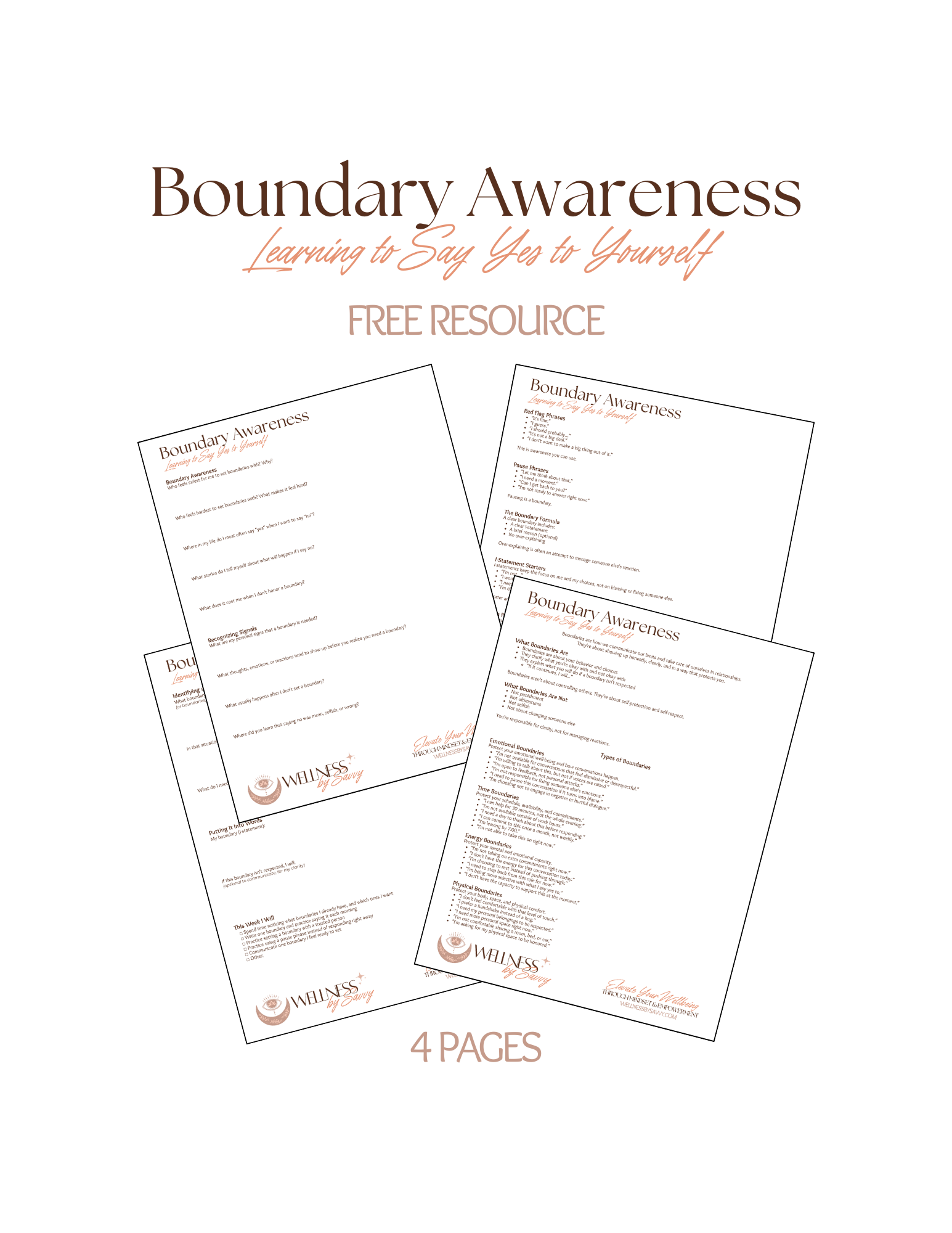
This 4-page guided resource is designed to help you build awareness around boundaries, including where they’re needed, why they feel hard, and how to begin honoring your limits with clarity and confidence. Through reflective prompts, you’ll explore who feels safest (and hardest) to set boundaries with, where you tend to say yes when you mean no, and the emotional, mental, and energetic cost of not honoring your needs.
You’ll learn what boundaries truly are (and what they are not), including how they support self-respect rather than control or punishment. The guide walks you through common internal signals that a boundary is needed, red-flag phrases that signal misalignment, and pause phrases you can use to slow down and respond intentionally.
You’ll also explore different types of boundaries (emotional, time, energy, and physical) along with real-life examples and clear I-statement starters to help you practice setting boundaries without guilt or over-explaining. This resource emphasizes awareness as the first and most important step, reminding you that confidence grows through repetition, not perfection.
This guide is ideal if you’re beginning your boundary journey, struggling to name or communicate boundaries, or looking for practical, compassionate tools to choose yourself with clarity.
This 4-page guided resource is designed to help you build awareness around boundaries, including where they’re needed, why they feel hard, and how to begin honoring your limits with clarity and confidence. Through reflective prompts, you’ll explore who feels safest (and hardest) to set boundaries with, where you tend to say yes when you mean no, and the emotional, mental, and energetic cost of not honoring your needs.
You’ll learn what boundaries truly are (and what they are not), including how they support self-respect rather than control or punishment. The guide walks you through common internal signals that a boundary is needed, red-flag phrases that signal misalignment, and pause phrases you can use to slow down and respond intentionally.
You’ll also explore different types of boundaries (emotional, time, energy, and physical) along with real-life examples and clear I-statement starters to help you practice setting boundaries without guilt or over-explaining. This resource emphasizes awareness as the first and most important step, reminding you that confidence grows through repetition, not perfection.
This guide is ideal if you’re beginning your boundary journey, struggling to name or communicate boundaries, or looking for practical, compassionate tools to choose yourself with clarity.